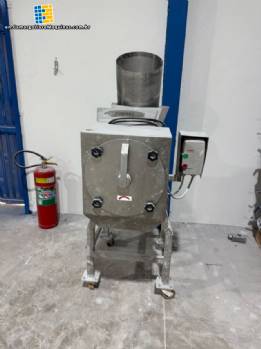
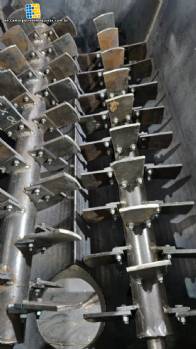
Possible uses and functioning of a de-crumbing equipment:
Powder Deagglomeration:
In some industries, especially the food, pharmaceutical or chemical industries, powders may form lumps or agglomerates during storage or transportation. A de-clumping mill can be used to break up these clumps, making the powder more homogeneous.
Pellet Breakdown:
In industrial processes that involve the production of pellets or agglomerates of materials, a delumber can be used to break up these pellets, providing a more uniform material.
Deagglomeration of Grains or Granular Materials:
In sectors such as agriculture or grain processing, where grains can clump together, a delumber can be used to separate and break up these clumps.
Deagglomeration of Chemical or Pharmaceutical Products:
In the chemical or pharmaceutical industry, where material consistency is crucial, a delumber can be used to deagglomerate chemicals or pharmaceutical ingredients.
Possible Features:
Rupture Mechanism:
It may include a breaking mechanism, such as shovels, hammers, or other devices, to break up clumps.
Size Adjustment:
It can allow adjustment of the size of the deagglomerated particles depending on the needs of the process.
Continuous or Batch Operation:
It can be designed for continuous or batch operation, depending on the application.
Speed control:
It can offer speed control to adjust the de-agglomeration intensity.
Hygienic Design:
In some industries, such as pharmaceutical or food, it can have a hygienic and easy-to-clean design.
The specific description of a delumber mill may vary depending on the application and process requirements in which it is used. If you have a specific context or application in mind, providing more detail can help provide more accurate information about the function and operation of this type of equipment. |