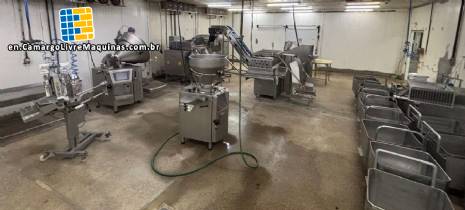
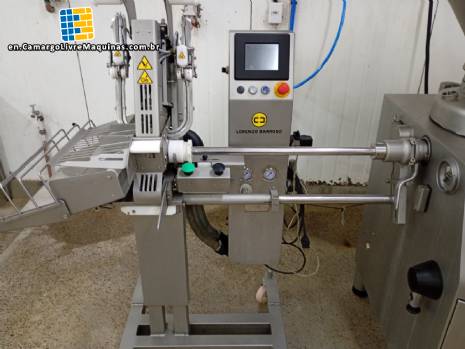
A clipper is an industrial machine designed to hermetically seal the ends of flexible packaging—such as sausage casings (salami, mortadella, sausages), bags, nets, and pouches—using aluminum clips (called clips or staples).
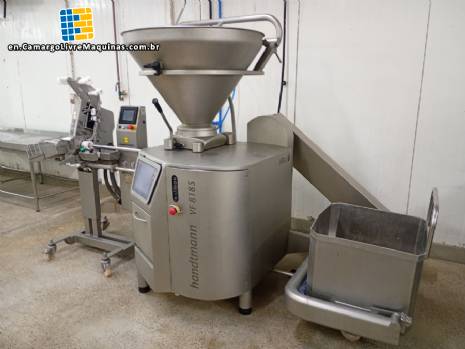
It receives the mass from a vacuum stuffer, portions the casing, and applies one or two metal clips to seal the product with high pressure and speed.
In high-speed production lines, the clipper operates connected directly to a vacuum filler/stuffer, ensuring standardization, hermetic sealing, and high throughput without the need for manual tying.
The main function of the automatic clipper is to ensure a tight seal and precise dosing of pasty, viscous, or solid products packaged in casings and bags. Advantages:
- Sealing and Preservation: Maintains the internal pressure of the product and prevents contact with air and external contaminants.
- Standardization of Pieces: Ensures uniform size, weight, and shape in the portioning of products.
- Loop Insertion: Many clippers automatically insert the cord/ribbon loop along with the clip, allowing the product to be hung on the rack for smoking or cooking.
- Cutting and Separation: Performs a clean cut between pieces or allows programming of sequences.
Clippers are mainly classified by the number of clips applied per cycle and the level of automation:
- Double Clipper: Applies two clips simultaneously and cuts the casing in the center of them. It is the industry standard for sausages, as it closes the end of the previous link and the beginning of the next link in a single operation.
- Single Clipper: Applies only one clip per cycle. Ideal for closing bags, vacuum bags, secondary packaging, or nets for poultry and fruit.
Although the processed meat sector (sausages, salami, mortadella, chorizo) is the largest consumer, staplers/clipping machines are widely used in various other sectors of the food, chemical, and general packaging industries. |