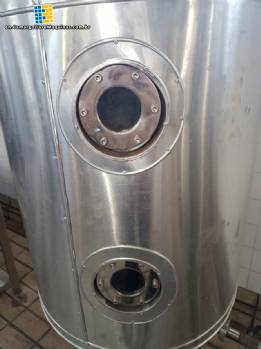
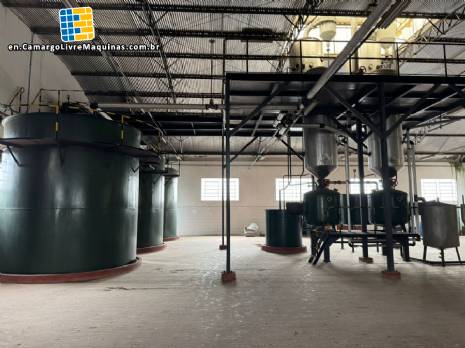
A still tank, also known as a still, is used to carry out the distillation process, which is a technique for separating components of a liquid mixture based on differences in volatility. This technique is often used to purify liquids, separate substances from a solution or obtain specific components from a mixture.
What is it for:
Liquid Purification: The still tank is used to purify liquids by removing impurities, contaminants or unwanted components through distillation.
Component Separation: Allows the separation of components of a liquid mixture based on their different boiling temperatures, taking advantage of the distinct volatility properties of each component.
Obtaining Specific Components: It can be used to isolate specific components of a mixture, such as alcohol distillation to obtain different degrees of purity.
Production of Solvents and Chemicals: It is common in the chemical industry to produce solvents, chemicals and pure materials.
How it works:
The basic operation of a distillation tank involves the following steps:
Heating: The liquid mixture is heated inside the distillation tank. The components of the mixture have different boiling points, and heating aims to vaporize the most volatile component.
Vapor Formation: The most volatile component of the mixture reaches its boiling point first, transforming into vapor.
Condensation: The vapor is conveyed to a condensation system, where it is cooled and returns to a liquid state. This condensed liquid, called distillate, is collected.
Distillate Collection: The distillate is collected in separate containers, resulting in the separation of the mixture components.
Process Repetition: The heating, vaporization and condensation process can be repeated several times to obtain greater purity or separate different fractions.
Types of Distillation:
Simple Distillation: Used to separate components with different boiling points, especially when the difference in volatility is significant.
Fractional Distillation: Applied when components have closer boiling points. A fractionation column is added to the system to increase separation efficiency.
Vacuum Distillation: Performed under reduced pressure to reduce the boiling points of the components, allowing the distillation of heat-sensitive substances.
Additional Equipment:
Condenser: Device that cools vapor, condensing it back to liquid.
Fractionation Column: Used in fractional distillation to increase separation efficiency.
Thermostat or Heater: Controls the temperature of the liquid inside the distillation tank.
Collection Vessels: Where the distillate is collected.
Applications:
Chemical Industry: Production of solvents, pure chemicals, and separation of components.
Pharmaceutical Industry: Purification of active substances in medicines.
Food Industry: Production of alcoholic beverages, purification of essential oils.
Laboratories: Chemical analysis and solvent preparation.
Oil Industry: Oil refining and separation of fractions.
Beverage Production: Production of distilled beverages such as whiskey and vodka.
In summary, a distillation tank is an essential component to carry out the distillation process, being applied in various industries to separate, purify and isolate liquid components. |